 SynthMock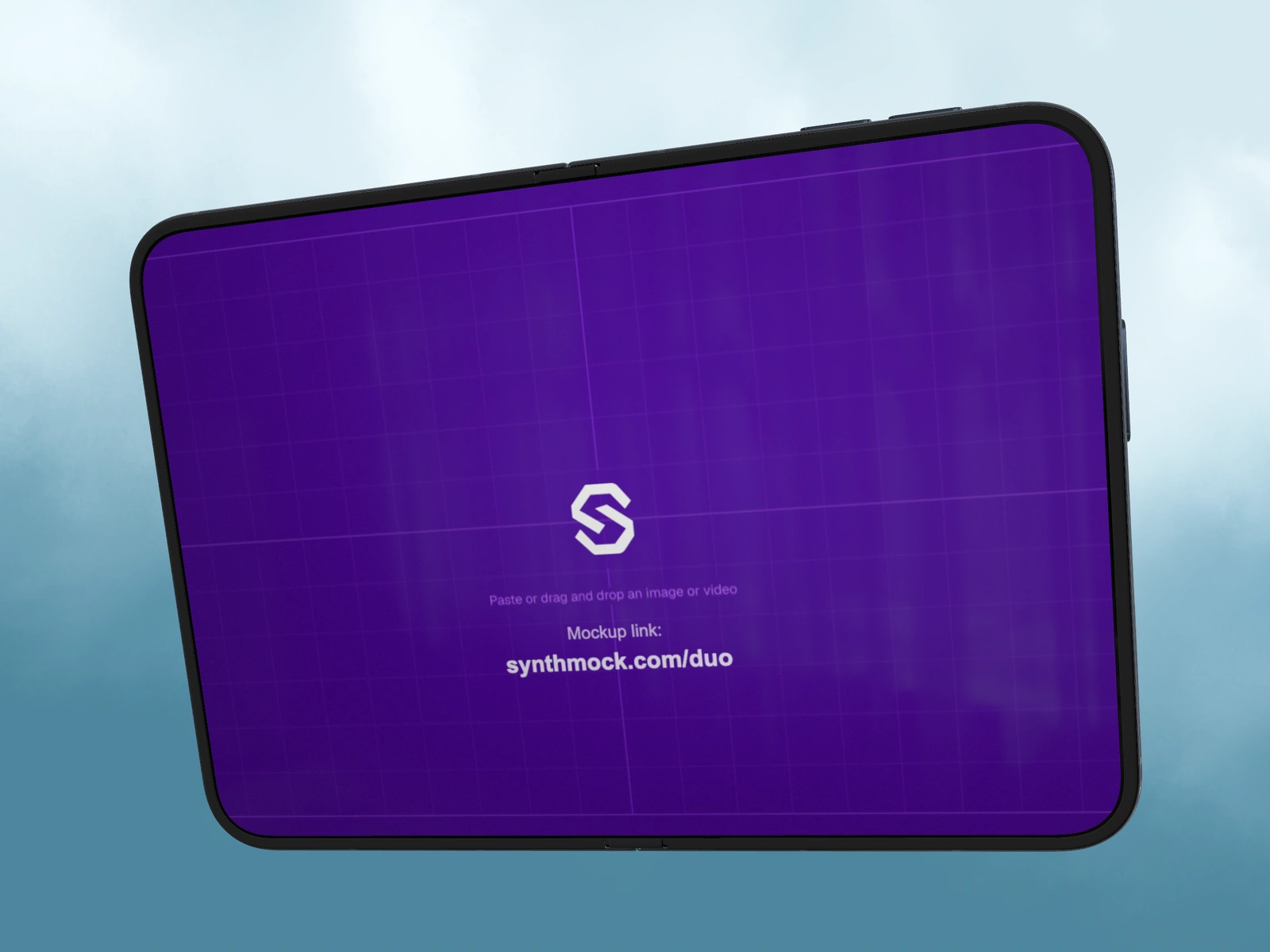
Turning the device upright and exporting a vertical image are different decisions. Set the device orientation first, check your source, then frame the final canvas.
Try it in SynthMock
Start with a Duo scene.
Use a reusable template as your starting point, then apply the choices in this article.
A paid plan is required to use templates and export.
Separate three controls that look similar
Device orientation chooses a landscape or portrait presentation for the model. Camera Roll rotates the entire view. The export aspect ratio defines the outer canvas. You can have a portrait-oriented device in a wide campaign or a landscape-oriented device in a vertical video.
Start with the phone fully open so you can see the direction of headings and controls. Keep Roll near zero while checking orientation; otherwise two rotations can make a simple issue difficult to diagnose.
Turn, inspect and frame in that order
Use the device orientation choices shown in the model controls. Read the editor’s ideal-media guidance after changing orientation, and confirm the actual preview rather than assuming a fixed source direction across every pose.
- Set Fold to 180° and choose Portrait in Device orientation.
- Inspect a recognizable label or icon in the artwork to confirm it is upright.
- If the composition needs a portrait-specific interface, prepare that layout in your source design file and replace the appropriate screen image.
- Choose the output ratio for the destination: for example, 9:16 for a tall campaign canvas.
- Use Pan X, Pan Y and Zoom to place the device, then add a small Roll only if the composition benefits from it.
Revisit the closed pose
A portrait inner composition still belongs to a phone with a cover screen. If the project contains folding motion, inspect the closed cover after changing orientation. The cover should remain readable, and neither endpoint should leave the frame.
When the source looks sideways, return Roll to a neutral value and inspect device orientation independently. When the device is upright but too small, adjust Zoom and Pan rather than changing the artwork dimensions blindly. Save a still of the intended final pose before building more motion around it.
Final pass
Before you call it finished
- Device orientation and export orientation are intentional.
- A recognizable source label appears upright.
- Closed and open poses fit the final canvas.
Make the next version yours.
Explore Duo templates ↗